Problem and data
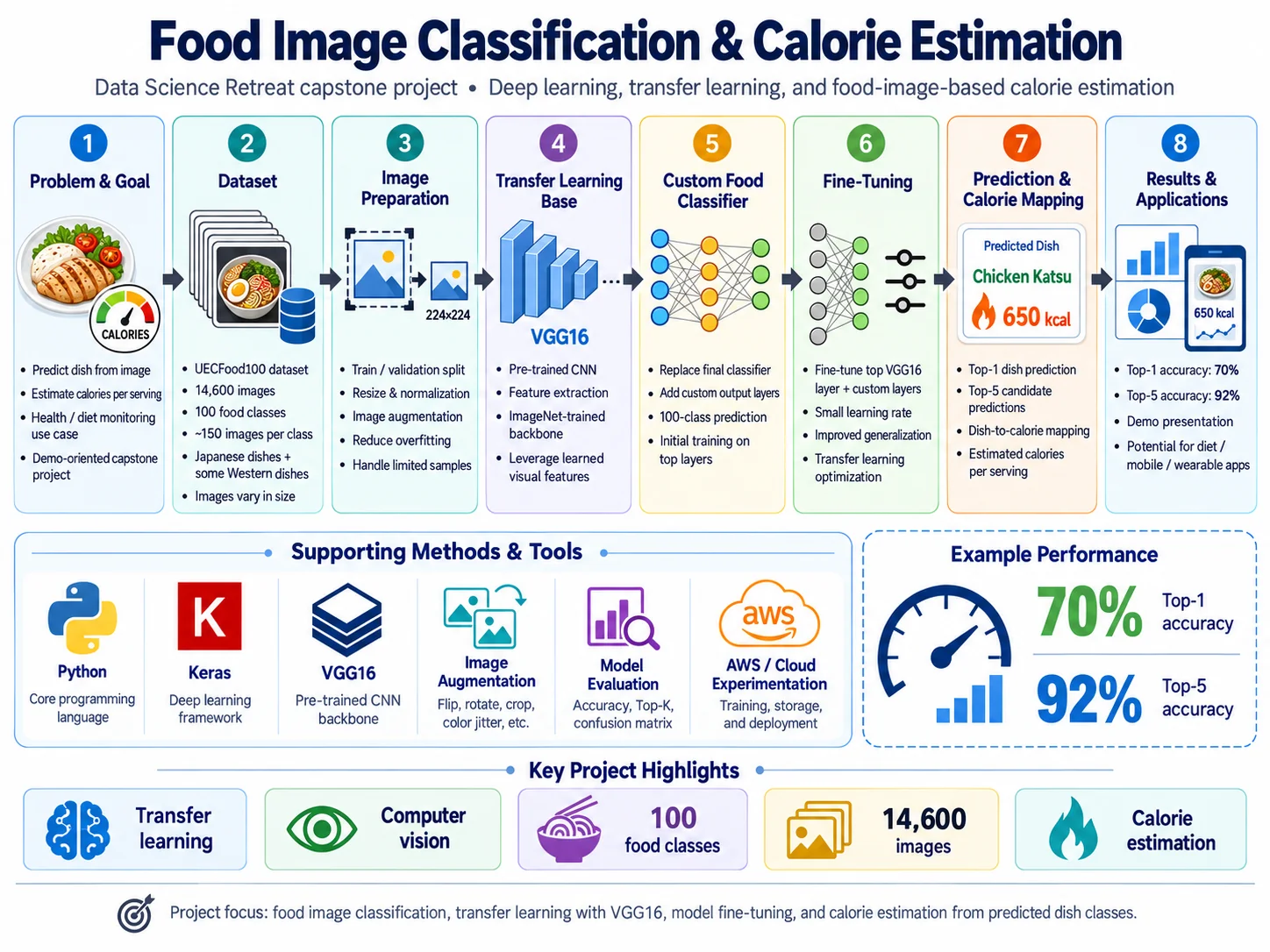
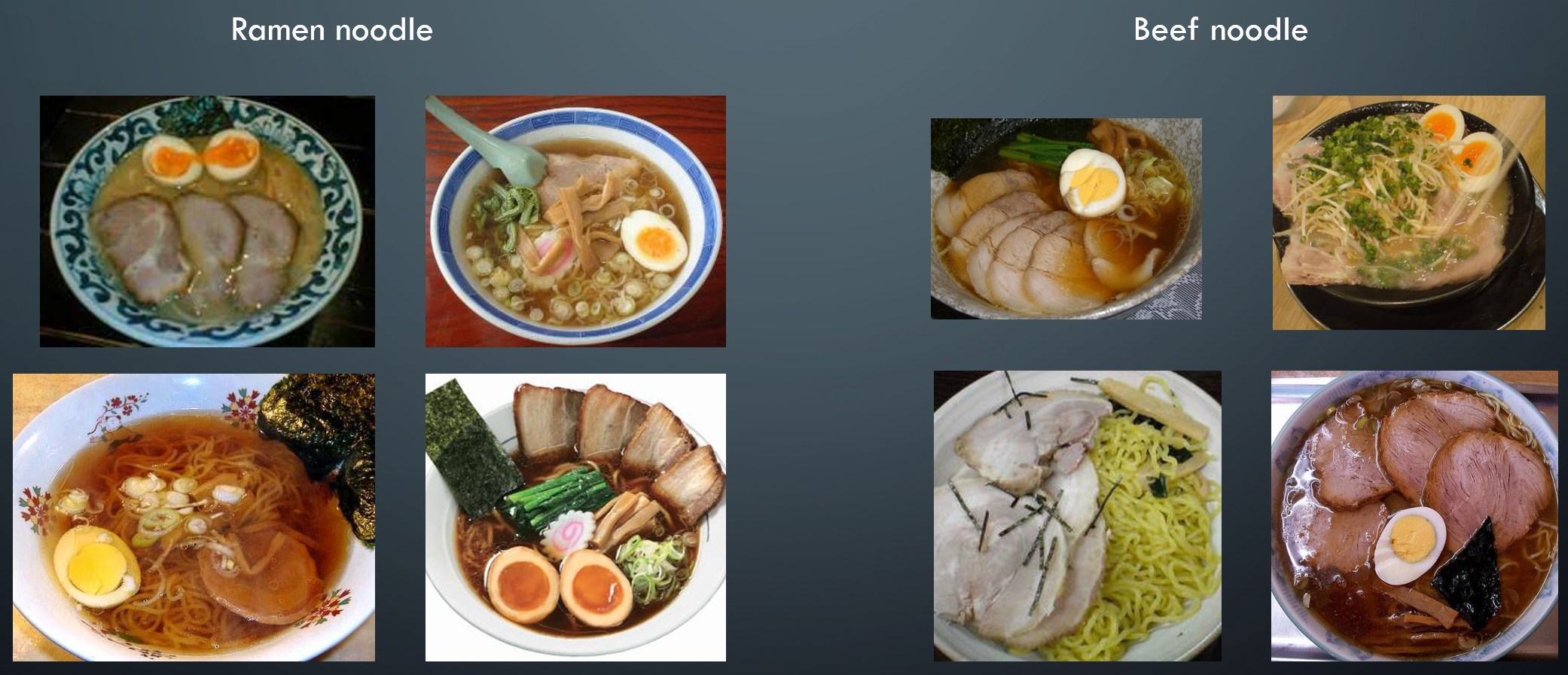
UECFOOD100 contains visually similar food classes, uneven class sizes, and images with widely varying dimensions. The repository's working split contains 10,183 training images and 4,428 validation images across 100 classes.
Original project material
Transfer-learning pipeline
The first stage extracted bottleneck features from ImageNet-pretrained VGG16 and trained a custom classification head. The later stage reused those weights and fine-tuned the highest-level pretrained feature layer together with the classifier, with augmentation used during training.
Measured results
Historical project results record about 70% top-1 and 92% top-5 after fine-tuning. These are original 2016 project measurements rather than a modern benchmark reproduction.
End-to-end recognition demo
A demonstration sent a food photograph from a phone to the model running on a computer, returned the predicted class, and mapped that class to a calorie-per-serving lookup. The prototype did not estimate portion size from the image.
Historical context
This 2016 project is presented as historical ML work: transfer learning, fine-tuning, evaluation, and an end-to-end prototype using the practical deep-learning stack available at the time.